The LYCRA Company is a proud ingredient brand with a decades-long history of dreaming big. The company is powered by a team of experts across fields — scientists, thinkers, market leaders — all motivated by a shared passion: to make life more comfortable. In its 66+ years on the market, Fiber® fiber has transformed the garment industry, helping to fuel the rise of activewear and athleisure and making everything from swimwear to denim to intimates more comfortable. The LYCRA Company revolutionized comfort in 1958 and is still doing it today.
Recently, the Denim Focus team spoke with Thiruvengadam Rajagopal, Commercial Director, South Asia at The LYCRA Company. The key discussion points are mentioned below for our readers-
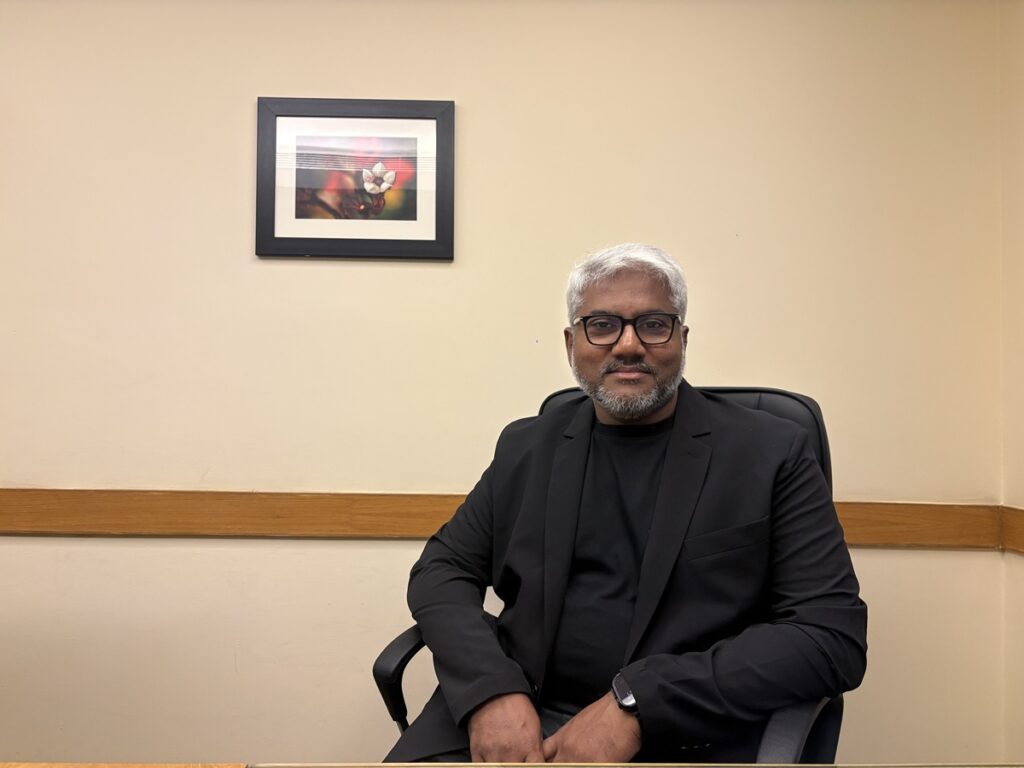 Figure: Thiruvengadam Rajagopal, Commercial Director, South Asia at The LYCRA Company
Denim Focus: What are the key growth opportunities for the LYCRA® brand in South Asia’s textile and apparel markets?
Thiruvengadam Rajagopal: Textiles and apparel remain a strategically important sector across South Asia and one of the main sources of revenue for the countries in the region.
Growth opportunities for the LYCRA® brand come from product differentiation, value chain activities and support for product line innovation at strategic partner mills.
We see growth potential driven by consumer demand for functional apparel. We also play an important role in helping meet durability and sustainability expectations for fabrics and garments, and in supporting consistency and fit across categories including denim, activewear, intimate apparel and technical textiles.
- Denim: We support current trends with our fabric technologies, LYCRA® dualFX® fabric and LYCRA® VintageFX fabric, helping preserve the authentic look and performance of denim.
- Performance wovens: We focus on comfort stretch and lightweight constructions with LYCRA FiT400™ fiber, alongside LYCRA® EcoMade fiber, made from 20% pre-consumer waste.
- Intimates: LYCRA® ADAPTIV fiber adapts to the body’s movements, providing dynamic comfort, performance and fit.
- Activewear and athleisure: We focus on easy stretch and recovery with our fiber offerings. We also address moisture management as a key consumer expectation, supported by options made with recycled content.
Denim Focus: How is The LYCRA Company supporting Bangladesh’s manufacturers in meeting evolving global buyer requirements?
Thiruvengadam Rajagopal: The LYCRA Company continues to help Bangladesh’s manufacturers strengthen their technical skills and develop new concepts with its fiber and fabric platforms. This helps them meet the rising expectations of global brands and retailers.
We help mill partners take the next step in value selling, with dedicated selling tools and faster speed to market.
We also provide mill-based training on product handling and support efficiency improvements, so mills can compete confidently with global suppliers.
Together, these efforts help upgrade Bangladesh’s value proposition in the supply chain. They do this through stronger stretch fabric capabilities, more consistent fabric quality in athleisure and innovation-led selling.
We also help build stronger relationships between fabric mills and their brand and retail customers. This lets mills offer more value and compete on more than price.
All of these value chain and mill-focused activities help Bangladesh’s manufacturers build global buyers’ trust in their innovation and consistent quality.
Denim Focus: What challenges do manufacturers face in adopting advanced stretch fiber technologies?
Thiruvengadam Rajagopal: In my experience, there are broadly two types of manufacturers in the industry.
Type A: These manufacturers value product differentiation and strong storytelling built on the right ingredients. They are well equipped to work with advanced stretch fiber technologies across their value chain. They position themselves as reliable partners with strong technical discipline, and they work closely with supply partners to meet trade expectations for specialty fabrics.
Type B: These manufacturers focus mainly on core products and may face challenges with cost increases, shorter lead times and process control when adopting advanced technologies.
These manufacturers typically face challenges in a few key areas:
- Longer development cycles: Innovative stretch fabrics need more time for sampling and approvals, which can slow adoption.
- Development cost pressure: Manufacturers may hesitate to invest more and may wait for buyer confirmation before starting sampling.
- Technical capabilities: They need to close knowledge gaps in choosing the right raw materials, fibers and fabric parameters to meet buyer needs.
- Sustainability trade-offs: They need to balance durability, mill efficiency and waste control to meet sustainability goals and buyer expectations for advanced stretch fabrics.
- Supply chain coordination: They need closer collaboration with product experts.
Denim Focus: How does The LYCRA Company plan to strengthen its commercial partnerships with Bangladesh’s textile and ready-made garment (RMG) industry?
Thiruvengadam Rajagopal: The LYCRA Company works across the value chain in Bangladesh’s textile and RMG industry. We strengthen relationships with partner customers through value selling of our fiber and fabric platforms, helping them become differentiated suppliers in the region.
Collaboration is central to this approach. This includes working closely with value chain members to provide innovative solutions, such as LYCRA® EcoMade fiber, made from 20% pre-consumer waste, and Renewable LYCRA® fiber, made with 70% plant-based content.
Today, The LYCRA Company continues to play a central role in the textile marketplace, connecting mills, makers and brands up and down the value chain and supporting the development of fabric and garment designs that enhance everyday life.
We support mill partners with joint development and technical expertise. This includes a tailored approach to building selling tools for their fabrics and garments, with value propositions backed by supporting data. This approach is especially relevant as Bangladesh’s RMG sector moves toward higher-value products, greater sustainability and stronger buyer–supplier collaboration.
LYCRA®, LYCRA® dualFX®, LYCRA® VintageFX, LYCRA FiT400™, LYCRA® ADAPTIV and LYCRA® EcoMade are trademarks of The LYCRA Company.