Diesel’s circularity project with the United Nations is coming to fruition.
The OTB-Group-owned brand is set to market 28,000 pairs of jeans this fall made using a minimum of 20 per cent recycled fibers, derived from cutting scraps sourced from its Tunisian supply chain.

Last year, Diesel teamed with United Nations Industrial Development Organization (UNIDO) to establish a closed-loop recycling system for fabric-cutting scraps. The idea behind the project, part of the EU-funded SwitchMed Programme, is to show how production scraps can and should be treated as a resource and that more responsible raw material use can be achieved through circular business models extended to the entire supply chain.
UNIDO and Diesel have primarily focused on establishing a local business ecosystem in Tunisia to enhance the value of pre-consumer textile waste. This begins with the sorting of cutting scraps at garment factories. The scraps are then converted into regenerated cotton fibers using a mechanical recycling process and reintroduced into the spinning and weaving process for denim fabrics.
 DIESEL’S DENIM SKIRT MADE WITH RECYCLED TEXTILE SCRAPS.
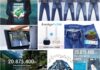
Approximately 7,500 kg of textile cutting waste from Diesel’s denim production in Tunisia have been collected and sent to recycling facilities. The 46,000 meters of recycled fabrics these facilities produced were sewn into 28,000 pairs of jeans. A further 4,200 kg of textile-cutting waste has been dispatched to recycling facilities to be incorporated into fabrics for Diesel’s Spring/Summer 2024 collection.
The initiative aligns with Diesel’s For Responsible Living long-term sustainability strategy and supports the brand’s efforts to meet the UN Sustainable Development Goal 12, responsible consumption and production, said Andrea Rosso, Diesel’s sustainability ambassador. “Here at Diesel, we foster creative ways to reuse or recycle products and waste across our value chain and we believe that production scraps should be treated as a resource and a way to create innovation with our own product,” he said.