Introduction The global textile and apparel industry contributes 10% of total carbon emissions and is the second-largest consumer of the world’s water supply. In response, circular fashion has emerged as a powerful strategy, offering not only environmental solutions but also a new business model.
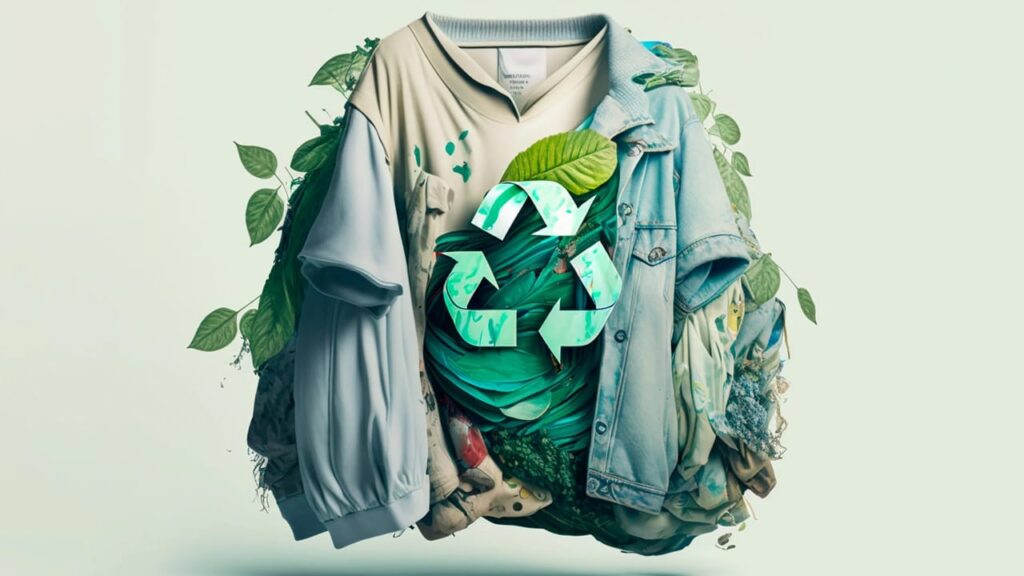
As Bangladesh eyes a transition from volume to value, integrating circular principles into the core of its production and supply chain can position the country as a future-proof textile leader.
Global Context and Market Size
- The global circular fashion market is expected to grow from USD 6.5 billion in 2022 to USD 12.7 billion by 2027, at a CAGR of 14.2%.
- McKinsey & Co. forecasts that circularity will create new revenue streams worth USD 560 billion annually by 2030.
- EU’s upcoming Extended Producer Responsibility (EPR) law will require brands to take responsibility for garment disposal—boosting demand for traceable, circular supply chains.
Bangladesh: Waste Statistics and Untapped Gold
- 400,000+ tons of pre-consumer textile waste are generated annually.
- 90% of this waste is either exported at a low value or discarded.
- Recycling this could add $4–5 billion to Bangladesh’s export basket (Reverse Resources, 2022).
- Local recycled yarn producers like Cyclo Recycled Fibers and Simco Spinning & Textiles are already exporting circular products to EU buyers.
Types of Waste and How They Can Be Circularized
| Waste Type | Circular Use | Key Technologies |
| Pre-consumer waste | Recycled yarn, filling, insulation | Mechanical recycling |
| Post-consumer waste | New fabric (closed loop) | Chemical recycling (e.g., Infinited Fiber) |
| PET/polyester waste | Recycled filament/yarn | Depolymerization |
| Denim waste | Blended yarn for fashion/reinforced use | Regeneration with cotton-poly blend |
Barriers to Circularity in Bangladesh
- Fragmented waste sorting infrastructure
- Lack of domestic recycling facilities for chemical methods
- Limited buyer awareness about local circular capabilities
- Missing policy framework for circular procurement and export incentives
Business Opportunity & Cost Savings Implementing circular practices saves brands and factories on:
| Parameter | Conventional | Circular Model |
| Cotton cost | $1.6 – $2.0/kg | $1.0 – $1.3/kg (recycled) |
| Water usage | 10,000+ liters/kg | <1,000 liters/kg |
| Carbon footprint | High (CO₂ 10–15kg/kg) | Reduced up to 80% |
| Price mark-up | Limited | 10–30% extra for circularity |
Case Study
Revival Recycle Project – Narayanganj A mid-sized factory in Narayanganj implemented an internal waste segregation and regeneration unit. Result:
- Recycled 35% of their cutting waste in 12 months
- Saved $120,000 on raw material import
- Gained direct orders from 2 new EU brands due to sustainability certification
Forecast for Circular Integration in Bangladesh (2024–2030)
| Year | % of Factories Using Circular Practice | Estimated Circular Export Value (USD Billion) |
| 2024 | 10% | 1.2 |
| 2025 | 15% | 1.9 |
| 2026 | 25% | 2.8 |
| 2027 | 35% | 4.1 |
| 2028 | 45% | 5.7 |
| 2030 | 60% | 7.5 |
Recommendations for the Industry
✅ Mandatory waste segregation at factory level
✅ Government incentives for investing in recycling plants
✅ Collaboration with European recycling tech companies
✅ Skills training on circular design and sustainable product development
✅ National Waste Mapping Platform for visibility and traceability
Conclusion
Circular fashion is not only an environmental necessity—it’s a strategic business advantage. If Bangladesh can integrate it holistically, the country will not just retain its export strength, but redefine its image as a leader in responsible fashion manufacturing.
Let us move from waste to wealth—and lead the textile revolution of tomorrow.
Author
Farhana Shraboni
Apparel Merchandising Professional